
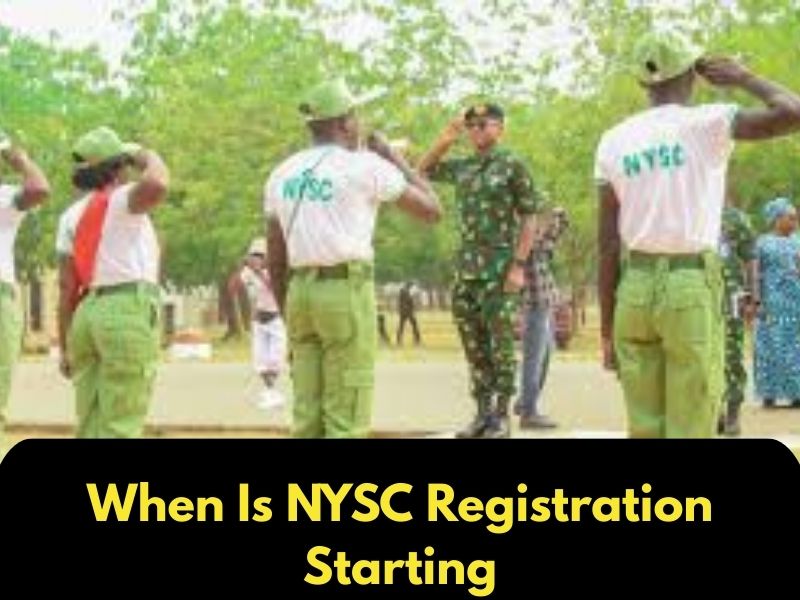
Asking When Is NYSC Registration Starting? Check the NYSC portal first. The NYSC publishes mobilization timetables and any registration windows on its official website and through verified state offices. Historically, NYSC posts specific registration windows for each batch/stream (e.g., online registration for a selected 4–7 day period ahead of camp). If NYSC has not yet published the official timetable for the 2026 stream, websites and NYSC-focused news blogs often publish tentative calendars—use these only for planning, not for definitive action.
Why this matters: The NYSC occasionally adjusts dates due to logistical reasons, senate-list delays, or national events. Relying on unofficial WhatsApp hearsay is risky; always cross-check with the NYSC portal and your institution’s Directorate of Academic Affairs/Student Affairs.
How NYSC organises graduates: batches and streams explained (so you can find your start date)
NYSC mobilises graduates in three batches each service year: Batch A, Batch B, and Batch C. Each batch can be split into streams depending on the number of graduates and logistics. For example, Batch A might have Stream 1 and Stream 2 with different camp dates. This structure spreads the large cohort across the calendar and usually follows academic calendars and school senate-list uploads. Typical patterns observed in recent years:
-
Batch A: Often mobilised in the first half of the year (around March — June windows, though exact months vary).
-
Batch B: Usually mid-year (often July — October windows).
-
Batch C: Typically toward the end of the year (October — December windows).
For the 2026 cohorts (Batch A, B, C), this article gives guidance tailored to each batch’s likely planning window, but again: check the NYSC portal for the final, binding timetable.
Typical NYSC Registration timeline (what to expect, day-by-day windows)
NYSC’s mobilisation normally follows several steps. A typical timeline (based on recent mobilisation timetables) looks like this:
-
School senate approval & list upload (PCM submission) — Your institution approves your graduation list and forwards it to NYSC. This is the first and most critical step. Without it, you cannot register. (Timeframe: varies; must be completed before the NYSC batch mobilises.)
-
NYSC opens the mobilisation portal for online registration — This is usually a short, fixed window (often 4–10 days depending on NYSC’s schedule for that batch/stream). During this time, you must complete steps on the NYSC portal (enter data, upload passport photo, make biometrics arrangements, etc.).
-
Verification/Screening at camp (orientation registration) — After successful online registration and stream allocation, you report to the orientation camp on the date given by NYSC for your stream.
-
Passing Out/Deployment & Posting — Placement and posting occur in the months after camp completion.
Because NYSC’s exact windows change from year to year, these are process milestones rather than fixed dates. For planning purposes, graduates should assume the online registration window will be short and be ready the moment NYSC announces it.
Where to check for official NYSC registration announcements
Always rely on these primary sources:
-
NYSC official website (www.nysc.gov.ng) — mobilisation timetables, announcements, contact details.
-
NYSC state offices and official social media handles — many states share camp-specific notices and clarifications for PCMs.
-
Your institution (Dean/Academic Affairs/Student Affairs) — confirms when they will upload senate-approved names (PCM).
-
Major education portals & national newspapers — they often repost official timetables, but confirm with the NYSC site.
Tip: Bookmark the NYSC homepage and check it the first time the new mobilisation window is expected. Many successful registrants refresh the portal daily when dates are due.
How Batch A, B & C applicants should plan NOW (practical calendar for 2026)
Even if the exact 2026 mobilisation date is not yet released, you can prepare with a practical schedule based on past patterns. Below is a planning calendar for each batch designed to minimise risk, assuming typical windows (adjust as required when NYSC releases definitive dates).
2026 Batch A (likely window: Q1–Q2 2026)
-
Now — Next 1–3 months: Confirm graduation status with your school; ensure all fees are cleared and that you are on the senate-approved list.
-
4–6 weeks before expected portal opening: Prepare digital passport photo (white background, correct size), local contact details, and scanned documents (degree certificate or statement of result, A/L or transcript if needed).
-
During the expected registration window, Complete NYSC online registration on day one if possible. Confirm mobilisation number and stream allocation.
-
Goal: Be mobilised and at camp during the Batch A orientation window once NYSC announces dates. (Example past patterns show Batch A often held around April–June in recent cycles).
2026 Batch B (likely window: mid-year)
-
Now — 2 months before expected window: Verify with your institution that your name will be uploaded in time for Batch B.
-
2–4 weeks before portal opening: Finalise all documentation and arrange travel if you live far from your enrolling institution or primary residence.
-
During registration window: Register early; follow up on any portal errors quickly via NYSC helpdesk or your institution.
-
Goal: Be prepared for a July–October mobilisation window, depending on how NYSC staggers streams.
2026 Batch C (likely window: Q4)
-
Now — longer lead time: Often, the last batch, Batch C, admits late graduates or those with delayed senate lists. Make sure your school has uploaded your name.
-
1 month before portal opening: Confirm any special instructions for foreign-trained graduates or those with outstanding documentation.
-
During the registration window: Complete registration and monitor postings for camp and stream allocation.
-
Goal: Be ready for the October–December windows historically associated with Batch C mobilisations.
Step-by-step: How to register on the NYSC portal (the exact process)
Note: The portal interface may be updated; the steps below reflect the widely used process across recent mobilisations.
-
Visit the mobilisation section on www.nysc.gov.ng and choose “Fresh Registration.”
-
Enter your institution’s details and confirm your name on the senate-approved list (PCM). If your name is not on the senate list, contact your school immediately — NYSC can only mobilise those on the official list.
-
Complete the online form: personal data, next of kin, contact addresses, and educational qualifications. Ensure all spellings match your certificates.
-
Upload required documents: passport photograph (follow NYSC specs), scanned degree certificate/statement of result, and any other requested documents (O-level certificates if asked). For foreign-trained graduates, follow the special foreign-trained upload instructions.
-
Pay any portal fees (if applicable) through the approved payment channels — be wary of third-party payment links; use only NYSC-approved methods.
-
Print or save your registration slip/acknowledgement after completion. Keep the mobilisation number and unique code safe.
-
If there is a problem, use the NYSC helpdesk, your institution’s NYSC desk, or the state NYSC office to resolve issues promptly.
Top portal tips: use a stable internet connection, avoid public computers for sensitive uploads, and always double-check names, dates, and spellings.
Documents checklist (make a printable list)
Have the following ready in both digital and original formats:
-
Valid government-issued ID (national ID, international passport, or driver’s license).
-
Degree certificate or official statement of result (if degree already collected).
-
School-issued Graduation/Convocation certificate or confirmation that your name is on the senate-approved list (PCM).
-
Local/next-of-kin contact details.
-
Passport photograph (white background, following NYSC specifications).
-
O-level certificates (where required).
-
For foreign-trained graduates: NYSC’s foreign-trained documentation requirements and any WES / ENIC equivalence, if asked.
Make both high-resolution scans (PDF) and compressed JPEGs of photos to avoid portal upload issues. Keep at least two backup copies offline and in cloud storage.
Common reasons graduates miss NYSC registration — and how to avoid them
-
Name not uploaded on the senate-approved PCM list — the most common reason. Action: Stay close to your school’s Student Affairs office.
-
Incomplete or incorrect documentation — misspellings and wrong certificate types block registration. Action: verify names and have a certified copy of your degree.
-
Portal errors due to poor timing or heavy traffic — sometimes the portal is overloaded. Action: register early in the window, ideally on the first day (morning hours).
-
Payment mistakes or using non-approved payment channels lead to verification failure. Action: confirm payment routes on the NYSC official notice.
-
Late graduation/convocation processing by the institution — graduation lists need to be officially approved before mobilisation. Action: push your department to act early and get evidence of list submission.
Specific guidance for foreign-trained graduates
Foreign-trained graduates follow a slightly different process — often with separate registration windows and additional document checks (e.g., transcript, degree certificate, and sometimes validation from relevant credential bodies). NYSC sometimes allocates special dates for foreign-trained grads’ registration. If you studied overseas:
-
Contact your school to ensure your name will be included in the senate-approved list for foreign-trained grads.
-
Prepare extra documentation (transcripts, course outlines, national identification documents).
-
Expect longer verification times and be patient with any additional checks NYSC may require.
How to handle portal errors or rejected registrations
If your registration is rejected:
-
Read the rejection reason carefully on the portal.
-
Verify against your documents to ensure you uploaded the correct files and the right formats.
-
Contact your school’s NYSC desk immediately — they can sometimes re-upload or correct PCM issues.
-
Reach out to NYSC helplines (as listed on the official portal) and your state NYSC office. Document all communication (emails, screenshots).
Be proactive and keep copies of all screens and reference numbers.
Orientation Camp: what to expect (realistic preparation)
Orientation camp is physically and mentally demanding: expect daily drills, lectures, skill acquisition training, and group activities. Practical tips:
-
Camp kit: Buy an official NYSC kit from authorised vendors or check your state NYSC office for approved sellers.
-
Health: Bring necessary medication and ensure routine vaccinations are up to date. Some camps require health clearance.
-
Behaviour: maintain discipline; breaches in camp conduct can lead to sanctions.
-
Networking: camps are great for meeting future colleagues and building friendships; bring a small notebook for contacts and ideas.
-
Safety: follow instructions from camp officials — camps are highly structured for security and logistics.
Recent timetables and camp dates vary by stream — confirm your stream and camp reporting dates immediately after registration.
Deployment, Place of Primary Assignment (PPA) & the job market
After orientation and passing out, NYSC posts corps members to the state/districts according to needs and available positions. Some placement processes now include an online portal where you can indicate preferences, but postings are largely administrative assignments to ensure national coverage.
-
PPA (Place of Primary Assignment): your working location for the service year; it might not be the city you prefer. Be ready to adapt and use the opportunity to gain transferable skills.
-
Job market reality: Many corps members use service year networking to access internships and job leads. Be proactive — attend seminars, volunteer for extra responsibilities, and present yourself professionally.
Deferments, exemptions & alternatives
Not every graduate is eligible or ready for mobilisation. Common statuses:
-
Deferment: If you have a legitimate reason (e.g., ongoing studies or medical reasons), institutions may request deferment. Check the NYSC guidelines for deferment criteria.
-
Exemption: Those over the NYSC age limit or with permanent exemptions (rare) may not be mobilised. Confirm eligibility with NYSC and your institution.
-
Alternative service options: if exempted, verify any formal documentation from NYSC to avoid future confusion.
Always obtain documentation and official receipts for deferment or exemption processes.
Financial planning: realistic cost expectations
NYSC costs can include:
-
Transport to/from camp (varies by distance).
-
Camp kit (uniforms, toiletries, bedding where required).
-
Food & personal expenses during camp (some camps provide, but extras are your responsibility).
-
Medical costs for routine prescriptions, if needed.
-
Miscellaneous paperwork fees (document photocopies, local stamps).
Budgeting early reduces stress. If you need support, inform family or student union groups well before mobilisation.
Security & safety: what families should know
NYSC orientation camps and state offices prioritise safety, but families should:
-
Keep contact details updated on the portal (next of kin).
-
Confirm official camp reporting dates and relay them to family members.
-
Keep emergency contact numbers in a safe place and ensure at least one family member has copies of your documents.
-
Watch for official NYSC notices and avoid sharing sensitive personal data openly on social media.
Frequently asked questions
Q: If my name is not on the senate list, can I still register?
A: No. NYSC mobilises only those on the official senate-approved PCM list. Work with your institution to get it corrected.
Q: Can I change my name after registration?
A: Name changes are sensitive. Correct errors promptly via your school and NYSC helplines; significant changes may require notarised documents.
Q: What if my passport photo is rejected?
A: Re-upload a photo that matches NYSC specifications (white background, recent, correct dimensions). Schools sometimes offer photo stations to retake approved images.
Q: Are there multiple payment channels for registration?
A: Use only NYSC-approved payment methods listed on their official portal to avoid loss of fees or fraud.
A student’s reflective checklist before the portal opens (the night-before checklist)
-
Confirm your name on the senate list with an evidence email.
-
Scan degree certificate and ID; ensure files are under portal size limits.
-
Prepare the passport photo (digital & printed backup).
-
Have a list of phone numbers (student affairs office, family, NYSC helpline).
-
Charge devices and pick a quiet place with stable internet to register.
-
Keep at least N5,000–N20,000 accessible for kit and transit (adjust this estimate depending on location and kit costs).
How to verify NYSC announcements & avoid scams
-
Confirm every NYSC timetable via www.nysc.gov.ng before acting. If a site shares a timetable, cross-check with the NYSC official page.
-
Never pay unofficial agents who promise early posting or relocation — these are red flags.
-
Keep payment receipts and portal reference numbers safe; they are your evidence if issues arise.
Summary: When Is NYSC Registration Starting
I’ve written this guide with the practical urgency you feel in your last months of school — that mixture of hope, impatience, and a little fear about the unknown. The NYSC registration is a short window that can feel like a heavy gate: small details (a missing signature, a late PCM) can change your path. Yet every year, thousands of Nigerian graduates move through this system and find it to be a time of growth, exposure, and unexpected opportunity.
If you are Batch A, B or C for 202, plan early. Keep your documentation immaculate. Cultivate a patient, flexible heart. When the portal opens, be ready mentally and practically — the rest you can meet with resolve.
Remember: NYSC is both a civic duty and a chance to serve and learn. Approach it with professionalism, curiosity, and courage.
NYSC registration can feel bureaucratic, but treat it as a task like any other — prepare, act, verify, and follow up. The students who succeed are those who start early, check facts with official sources, and keep calm when small setbacks arrive.

