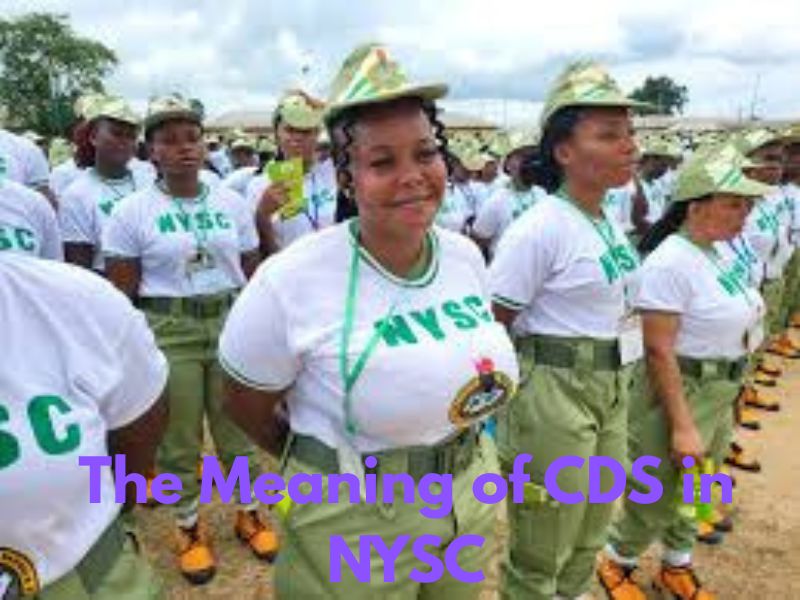
For every graduate embarking on the mandatory National Youth Service Corps (NYSC) year in Nigeria, one acronym quickly becomes central to the weekly routine: The Meaning of CDS in NYSC. It stands for Community Development Service. Far more than just a scheduled meeting, CDS is the practical, hands-on component of the NYSC scheme where corps members apply their skills to directly improve their host communities. It is the channel through the NYSC’s third objective—”to contribute to the accelerated growth of the national economy”—is actively pursued. In essence, if the orientation camp is the launchpad and the primary place of assignment (PPA) is the professional wing, then CDS is the community heartbeat of the service year.
What CDS Actually Is: The Meaning of CDS in NYSC
Community Development Service is a compulsory, weekly program held on a designated day, usually one afternoon set aside by the NYSC. During this period, all corps members in a local government area converge based on their chosen or assigned CDS group. Unlike their PPAs, which are often aligned with their academic disciplines, CDS focuses on collaborative projects and sensitization programs aimed at communal welfare and development. Participation is meticulously recorded and is a non-negotiable requirement for the successful completion of the service year and the eventual receipt of the certificate of national service.
The Structure and Groups: The Meaning of CDS in NYSC
CDS is organized into specialized groups, allowing corps members to contribute according to their interests or skills. The main categories include:
-
Sensitization/Advocacy Groups: These are perhaps the most visible. They include:
-
Anti-AIDS/Vanguard Club: Focuses on HIV/AIDS awareness, testing, and advocacy.
-
Drug-Free and Quality Club: Educates against substance abuse, especially among youth.
-
Reproductive Health & HIV/AIDS Prevention Club (RHPS): Targets family planning and sexual health education.
-
Corruption and Good Governance Club: Promotes accountability and ethical values.
-
-
Skill-Based/Volunteer Groups: These leverage the corps members’ direct talents:
-
Road Safety Club: Partners with FRSC to promote traffic regulations.
-
Editorial/Publicity Club: Handles announcements, newsletters, and media content for the local corps group.
-
Sports Group: Organizes sporting events and competitions.
-
Culture and Tourism Club: Promotes local heritage.
-
-
Project-Focused Groups: These are directly tied to physical projects:
-
Environmental Protection Club: Organizes sanitation exercises, tree planting, and waste management awareness.
-
School Health Club: Focuses on health education and basic care within public schools.
-
The Core Activities: More Than Just Meetings
A CDS meeting is not a talk-shop. It involves concrete planning and execution. Key activities include:
-
Project Identification: Corps members, guided by their CDS Officer (a NYSC official), identify pressing needs within their host community—a dilapidated school block, a lack of clean water source, poor sanitation, or a knowledge gap on a critical health issue.
-
Project Planning and Fundraising: The group develops a proposal, budget, and then mobilizes resources. This often involves personal contributions, soliciting support from local businesses, or writing grant proposals to the NYSC Headquarters or NGOs.
-
Execution and Sensitization: This is the action phase. It could involve building a borehole, renovating a classroom, organizing a free medical outreach, conducting a rigorous public campaign on a social issue, or teaching digital literacy.
-
Reporting: Detailed documentation of projects, with photographs and reports, is submitted to the NYSC local and state secretariats.
Why CDS is Indispensable
The significance of CDS is multi-layered. For the host community, it brings in fresh energy, ideas, and often tangible projects that address immediate needs, free of charge. For the corps member, it is a crash course in citizenship, empathy, and project management. It forces one to look beyond their personal comfort and engage with the stark realities and strengths of a new community. It builds leadership, teamwork, and problem-solving skills in a very raw, real-world context. For the nation, it is a decentralized engine of development, funneling the talent of young graduates to grassroots communities, fostering unity, and leaving a legacy of infrastructure and awareness across the country.
The Multifaceted Benefits of CDS: The Meaning of CDS in NYSC
The true value of CDS is revealed in its wide-ranging benefits, which extend far beyond the service year itself.
1. Benefits to the Corps Member:
-
Skill Development: CDS is a real-world classroom. Corps members gain practical experience in project management, public speaking, fundraising, proposal writing, and teamwork—skills rarely taught in university lecture halls.
-
Leadership and Responsibility: Taking charge of a health sensitization campaign or leading a renovation project fosters leadership, initiative, and accountability. It pushes individuals out of their comfort zones.
-
Networking and Unity: CDS forces interaction with corps members from different ethnic, religious, and academic backgrounds united by a common goal. This builds lasting friendships and a powerful professional network that spans the country.
-
Enhanced Employability: The tangible experience gained from managing a successful CDS project is a strong point on a CV. It demonstrates civic engagement, problem-solving ability, and project execution skills to potential employers.
-
Cultural Integration and Empathy: By deeply engaging with a host community’s needs, corps members develop a genuine understanding of different Nigerian cultures and societal challenges, fostering national unity and personal empathy.
2. Benefits to the Host Community:
-
Direct Development Projects: Communities receive tangible assets—a renovated school, a new borehole, a sensitized public on critical health issues—driven by the energy and dedication of corps members, often at little to no direct cost.
-
Knowledge Transfer and Sensitization: CDS groups bring vital information on public health, governance, environment, and education directly to the grassroots, helping to bridge information gaps.
-
Infusion of Fresh Perspectives: The arrival of young graduates with new ideas and modern approaches can inspire local youth and community leaders, sparking further development initiatives.
-
Strengthened Ties with National Institutions: The presence of an active CDS group makes the community more visible to the NYSC structure and potential partner organizations, opening doors for future collaboration.
3. Benefits to the Nation:
-
Grassroots National Development: CDS acts as a decentralized engine for development, addressing micro-level needs across the nation’s 774 local governments simultaneously.
-
Fostering Active Citizenship: The program instills in a large segment of the educated youth populace the habit of community service, creating a generation more likely to contribute to societal growth long after their service year.
-
Promoting National Unity and Security: By embedding young people from diverse backgrounds into new communities to solve local problems, CDS builds interpersonal relationships and understanding, which are fundamental to national cohesion.
Conclusion: The Meaning of CDS in NYSC
The meaning of CDS in NYSC transcends its simple definition as a weekly gathering. It is the soul of the service year, transforming the scheme from a mere postgraduate requirement into a genuine vehicle for national development. It is where the idealism of youth is channeled into tangible action—where a group of young graduates can point to a renovated health center or an educated community as their direct legacy. While the primary place of assignment offers professional experience, CDS builds character, civic responsibility, and a profound connection to the Nigerian reality. Ultimately, a corps member’s year is often defined not just by the job they held, but by the community project they helped bring to life.