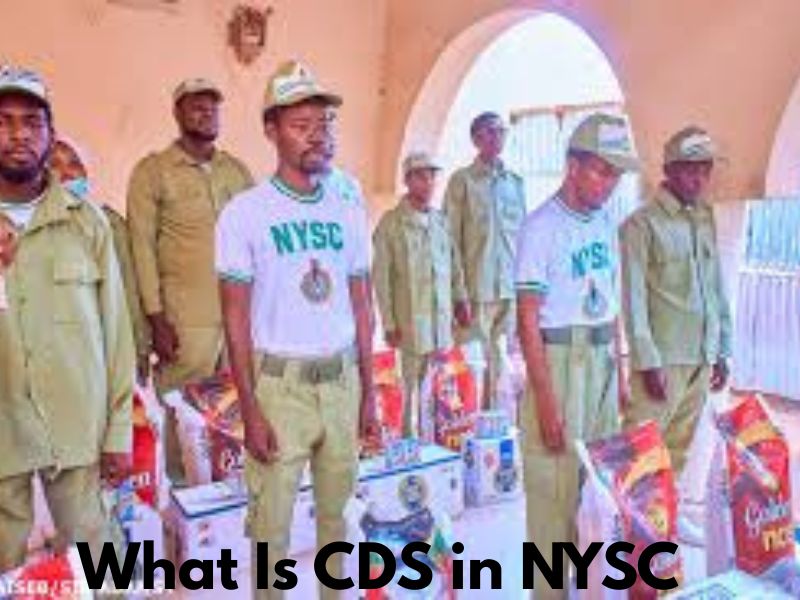
If you are a current or prospective corps member in Nigeria’s National Youth Service Corps (NYSC) scheme, you will quickly encounter the acronym “CDS.” So, What Is CDS in NYSC? In straightforward terms, the Community Development Service (CDS) is a core component of the NYSC programme where corps members are grouped according to their skills and interests to execute projects and initiatives that benefit their host communities. It is the practical, hands-on arm of the service year designed to foster positive change and personal development.
Unlike the primary assignment, which is a full-time job at your place of deployment, CDS is a weekly gathering of corps members for structured community-oriented work. It is not optional; it is a mandatory and graded part of the service year, crucial for your final certification.
The Structure and Groups of CDS
CDS is highly organized. At the start of the service year in each state, corps members are required to join one CDS group. These groups are typically coordinated by a serving corps member (the CDS President) and overseen by a NYSC Community Development Officer (CDO). The groups are designed to harness collective skills for targeted impact.
Common CDS groups include:
-
Health Initiative for Rural Dwellers (HIRD): Provides basic health checks, awareness campaigns, and medical outreach.
-
Reproductive Health and HIV/AIDS Awareness Group: Educates communities on sexual health, prevention, and stigma reduction.
-
Environmental Protection and Sanitation Group: Focuses on clean-up exercises, tree planting, and waste management education.
-
Education Development Group: Involves tutoring, literacy campaigns, and providing support to local schools.
-
SAFER (Sanitation, Food Security, and Empowerment of Rural Dwellers): Works on agricultural projects and skills for sustainability.
-
Others include: Drama/Entertainment, Sports, and Cyber Security groups, among others.
The Objectives and Importance of CDS
The CDS is far more than a weekly meeting; it serves multiple critical objectives aligned with NYSC’s founding ideals. Primarily, it bridges the gap between corps members and their host communities, fostering integration and mutual understanding. It allows you to apply your academic knowledge and personal talents to solve real-world problems, from building a borehole for a water-scarce village to teaching computer literacy.
For the corps member, it is a platform for leadership development, project management, and teamwork. It cultivates a spirit of patriotism and social responsibility. Importantly, your active participation and the success of your CDS projects are documented and significantly influence your final evaluation. A strong CDS record is often essential for qualifying for the NYSC State Honours Award.
What Does CDS Involvement Actually Look Like?
In practice, you will attend your CDS group meeting one weekday each week, as specified by your local NYSC secretariat. Activities range from planning sessions at a designated venue to executing projects in the field. A project cycle typically involves identifying a community need, mobilizing resources (sometimes through partnerships with local governments or NGOs), implementing the solution, and reporting outcomes to your CDO. This could mean organizing a one-day free medical camp, conducting a weekly tutorial class for pupils, or producing a drama skit to educate on a social issue.
The Hands-On Work: A Breakdown of CDS Activities in NYSC
The weekly Community Development Service (CDS) is where theory meets action. It’s not a talk shop; it’s a doing shop. The activities performed in CDS are practical, project-based, and designed to create measurable impact. These activities fall into two main categories: regular group meetings and special community projects.
1. Weekly Group Meetings and Sensitization Drives
This is the foundational activity. On your designated CDS day, your group gathers at a set venue. Here, you don’t just sit. You plan, train, and prepare for outreach. For a Health Initiative for Rural Dwellers (HIRD) group, this might involve practicing how to take blood pressure readings or packing materials for a medical outreach. A Reproductive Health group might design posters or rehearse drama sketches about HIV prevention. These meetings are where strategies are born, duties are assigned, and corps members receive necessary training from their leaders or invited experts.
2. Direct Community Projects and Interventions
This is the core action, where plans leave the meeting room. The specific activities depend entirely on your group’s focus.
-
For Health-Focused Groups (HIRD, Reproductive Health): Activities include organizing free medical check-up camps in villages, conducting door-to-door immunization awareness campaigns, distributing mosquito nets and demonstrating their use, and holding public lectures on nutrition, hygiene, or disease prevention. They may also host voluntary counseling and testing (VCT) sessions for HIV.
-
For Education and Literacy Groups: Activities are hands-on and instructional. Corps members run extra-mural classes or tutorial sessions for primary/secondary school students, organize literacy drives for adults in the community, establish reading clubs or small libraries in local schools, and provide career guidance talks to teenagers.
-
For Environmental Groups: This involves physical labour and advocacy. Key activities are organized community sanitation exercises (clearing drainage systems, packing refuse), tree planting campaigns in schools or public spaces, awareness rallies on plastic waste management, and projects to promote recycling or waste segregation within the community.
-
For Skills Acquisition and Empowerment Groups (like SAFFER): Activities are transformative and skill-based. They involve organizing short-term vocational training (e.g., soap making, tailoring, bead work) for women and youths, holding workshops on modern agricultural techniques for local farmers, and teaching basic financial literacy or business planning.
-
For Drama/Entertainment Groups: Their activity is advocacy through performance. They write, rehearse, and stage plays or skits on pressing social issues like drug abuse, gender-based violence, or civic responsibility at public places like markets or town halls.
3. Advocacy, Partnerships, and Reporting
A critical, often behind-the-scenes activity is resource mobilization. This involves writing letters to local businesses, government agencies, or NGOs to solicit support (funds, materials, expertise) for projects. Another key activity is documentation and reporting—taking photographs, keeping records of beneficiaries, and writing formal reports on project outcomes to submit to the NYSC Community Development Officer (CDO). This paperwork is essential for evaluating the project’s success and for your personal record.
Conclusion: What Is CDS in NYSC
The Community Development Service is the heartbeat of NYSC’s mission to national development. It transforms the service year from a mere job placement into an active civic engagement. Through CDS, the abstract ideals of unity and patriotism are translated into tangible actions—a repaired school fence, a healthier village, a newly empowered artisan.
For the corps member, it is an unparalleled opportunity to leave a lasting legacy, to develop soft skills rarely taught in classrooms, and to truly understand the Nigerian condition beyond your own upbringing. Your CDS group becomes your professional network and support system within the state. Therefore, approaching CDS with seriousness and creativity is not just about fulfilling a requirement; it is about maximizing the unique potential of your service year to grow yourself while uplifting others. In the final analysis, the success of your NYSC experience may well be measured by the footprint you left in your host community through CDS.